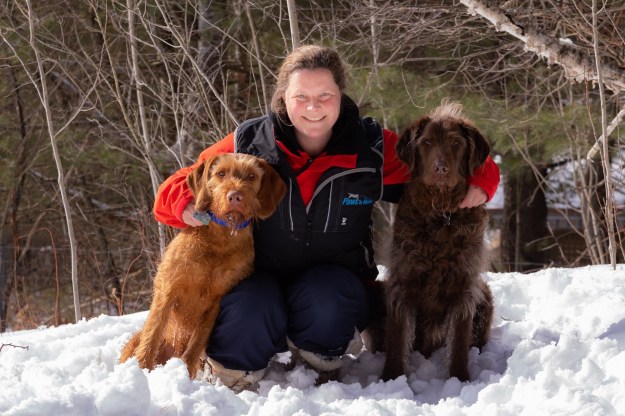
My name is Stella Barnett and I am a Physiotherapist registered with the College of Physiotherapy of Ontario for the assessment and treatment of people. I trained as a Physiotherapist in England and have been qualified since 2001. I work in private practice and have over 24 years experience predominantly treating sports injuries, musculoskeletal injuries and neurological conditions in people.
I have previously trained and competed in dog agility to championship level and beyond with one of my current dogs qualifying for nationals in 2025. I have over 17 years working with and training dogs for agility, scent detection, rally obedience, tricks, and of course just being pleasant members of my household!! Whether your dog is a member of your family or a canine athlete, rehabilitation can help with recovery from an injury or illness.
I have been working in canine rehabilitation since 2013, am a member of the Animal Rehabilitation Association of Canada and am a Registered Allied Animal Health Practitioner of Canada. I have completed a Diploma in Canine Rehabilitation through the Animal Rehabilitation Division, along with several other courses. As a Registered Physiotherapist, I aim to work closely with your veterinarian to ensure the best care for your dog.
Why ‘rehab’ and not ‘physiotherapy’? The term physiotherapy is protected by law for use in relation to the treatment of people. Although I am a Physiotherapist, I am not permitted to use the term physiotherapy in relation to the treatment of dogs. So, most commonly canine ‘physio’ is referred to as rehabilitation even though it is the same thing.
At your first appointment we will chat and record the history of your dogs condition. Your dogs posture, stance and movement will be observed. Measurements may be taken of joint range of motion, muscle strength and limb circumference. Testing may be performed for joint range of motion and stability, muscle tone and strength, areas of tenderness and balance and coordination. At the end of the assessment, we will discuss the findings and a proposed treatment plan. We will discuss how often treatment should be performed and what results to expect.
 Paws in Motion Canine Rehabilitation